
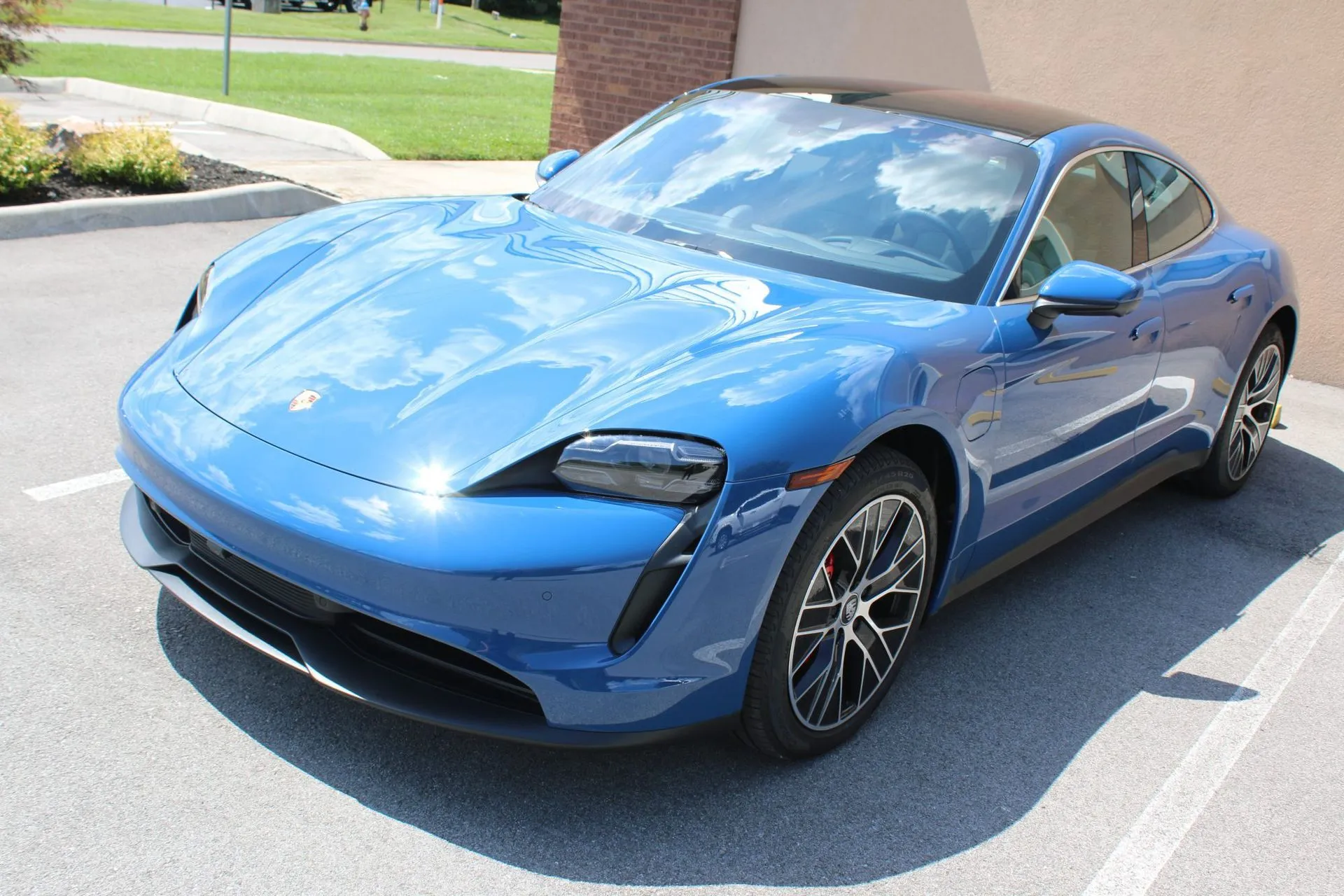
Window Tint Percentages Guide: What 5%, 20%, 35%, 50%, and 70% Really Look Like

Tim Buxton • November 5, 2026

Share this article

A window tint percentage is the share of visible light that passes through your window film. A lower number means darker tint. In Tennessee, tint on every window behind the windshield can’t be darker than 35%, so 35%, 50%, and 70% film are the usual legal choices, while 5%, 15%, and 20% are too dark for any window.

Not sure which shade fits your vehicle? Call Knox Details at (865) 246-9783 or request a quote.

What Do Window Tint Percentages Mean?

Window tint percentages rate how dark a film is, and they are the number Tennessee law uses to decide what you can legally put on your car. The percentage is called VLT, short for visible light transmission. A 70% tint lets 70% of outside light through. A 5% tint lets only 5% through, which is why it is often called “limo tint.”


Your car’s factory glass already blocks a little light, and film stacks on top of it. The finished window will look, and measure, a bit darker than the film’s number alone suggests. We cover what that means for staying legal below.


Window Tint Percentage Chart


Tint % (VLT) How it looks Best for Legal on any Tennessee window (except the windshield)?
5% Near blackout, very hard to see through Show vehicles and off-road use where the law allows No
15% Very dark Strong privacy, show-car look No
20% Dark, with a clear “tinted” look Bold appearance, strong privacy No
35% Medium, a balanced factory-plus look Everyday driving, the most common choice Yes, at the limit
50% Light, subtle shading Heat and UV control with a stealthy look Yes
70% Very light, almost clear Heat and UV rejection with a near-clear look Yes

Window Tint Percentages Compared

Difference between 20% and 35% tint

The difference looks small on paper, but you can see it. A 20% tint makes it hard to see into the car in daylight. A 35% tint lets someone see shapes inside up close. Tennessee draws its line at 35% on every window behind the windshield, so this is the difference between legal and ticketable.


Is 50% tint worth it?

For many drivers, yes. A 50% film looks natural, keeps night visibility strong, and still cuts glare and UV. If heat is your main concern, the film type matters more than the darkness. Ceramic film is built to reject more heat than dyed film at the same shade, so a lighter ceramic tint can feel cooler than a darker basic one.


What 5% tint is really like

A 5% tint gives the most privacy and the hardest night driving. It is not legal on any Tennessee window, and it makes backing up and changing lanes after dark harder for many drivers.


Window Tint Percentages in Tennessee

Tennessee’s tint rule is set by Tenn. Code Ann. § 55-9-107. It’s simpler than many guides make it sound. The statute doesn’t separate sedans from SUVs or vans. The same limits apply to every passenger vehicle:

Window Tennessee rule
Front side windows Tint can’t be darker than 35% VLT
Rear side windows Tint can’t be darker than 35% VLT
Rear window Tint can’t be darker than 35% VLT
Windshield Must stay at 70% VLT or lighter with tint applied, except the factory shade band

Exactly 35% is legal. The statute prohibits material with a transmittance of “less than” 35%.


Some SUVs and vans leave the factory with dark rear glass. That is factory privacy glass, and it isn’t a loophole for darker aftermarket film. The statute exempts those factory windows, but front door windows are never exempt.


Tennessee also has a few other important rules:

  • Installer paperwork: Professional installers must apply a compliance label to the driver’s window and give you a signed receipt.
  • Medical exemption: If a medical condition is adversely affected by ultraviolet light, your physician can submit a statement to the state. If the review board approves it, you receive a certificate or decal showing the degree of exemption.
  • Out-of-state vehicles: A vehicle registered in another state is exempt if it meets that state’s requirements.


Windshield tint percentages

Tennessee doesn’t allow aftermarket tint to push your windshield below 70% VLT. The only exception is the factory-installed shade band along the top. A clear, high-quality 70% film can block UV and heat without changing how the glass looks.


How tint laws differ in other states

Every state sets its own numbers, and they vary widely. If you drive an out-of-state vehicle or plan to move, check that state’s rules before you tint. 


How to stay legal when you pick a film

Tint stacks on top of your factory glass, and Tennessee officers can detain a vehicle to run a field comparison test. Choosing a film with a little room above 35% gives you a buffer. Ask your installer for a meter reading after the job.


How Tint Percentages Look at Night

Tint looks different depending on where you stand and what time it is.

  • From outside in daylight: The darker the film, the less anyone can see inside. At 5% and 20%, the cabin looks closed off. At 50% and 70%, you can still make out the interior.
  • From inside looking out: Daytime visibility stays good at most shades. A 70% film looks almost like clear glass.
  • At night: This is where darkness becomes a factor. A 20% or 5% film reduces how much streetlight and headlight glow reaches your eyes. Many drivers find 35% or lighter comfortable on dark Tennessee back roads.


What Percent Window Tint Should I Get?

Start with what you want the tint to do, then check what the law allows for that window.

Your main goal Where to start
Everyday look, balanced privacy 35% on every side window and the rear
Heat and UV control, subtle look 50% ceramic
Maximum privacy while staying legal 35% on every window; darker film requires a medical exemption
Clear look, windshield protection 70%
Night driving comfort 50% or lighter

The film type (dyed, carbon, or ceramic) drives heat rejection and price more than the percentage does. The darkness you choose usually has little effect on cost, so pick a shade for how you drive, not to save money. 

How to Check Your Window Tint Percentage

You have a few options for reading a tint percentage on a vehicle.

  • Tint meter: A handheld device that reads the final VLT through film and glass. Shops use it, and Tennessee officers can run a field comparison test.
  • Film sample comparison: An installer can hold sample squares against your glass so you can see the shade before you commit.
  • Phone apps: Some apps estimate tint, but they are not accurate enough to settle a legal question.


For a reliable answer, ask your installer to measure after the install.


Window Tint Percentage FAQs

What window tint percentages are there?

The common options are 5%, 15%, 20%, 35%, 50%, and 70%. Some films come in other numbers, such as 25% or 30%, but these six cover most requests.


Is 20% tint legal in Tennessee?

No. Tennessee’s limit is 35% VLT on every window behind the windshield, so 20% film is too dark for any window. Drivers with a qualifying medical condition can apply for an exemption.


Is 35% or 20% tint darker?

20% is darker. A lower percentage always means less light gets through.


What is the darkest legal tint in Tennessee?

35% VLT on every window behind the windshield. The windshield must stay at 70% VLT or lighter, except for the factory shade band.


What percent window tint is best?

There is no single best percentage. 35% is the most popular because it balances privacy and visibility while staying legal, and 50% is a strong pick for night driving and a natural look.


Can I tint my windshield?

Only lightly. Tennessee requires the windshield to stay at 70% VLT or lighter with tint applied, except for the factory shade band along the top.


Get the Right Tint Percentage at Knox Details

Choosing a tint percentage is easier when you can see the shades on your own glass. Knox Details, Knoxville’s 5-Time XPEL Dealer of the Year, installs XPEL PRIME™ ceramic window tint and other window tint options for drivers across Knoxville, Farragut, Maryville, Alcoa, Oak Ridge, Lenoir City, and Hardin Valley. 


Visit our Maryville tint shop or Sequoyah Hills tint shop, or call (865) 246-9783 to talk through your options. Still deciding on film type?

Recent Posts

By Tim Buxton • October 29, 2026
Ceramic window tint answers on heat, lifespan, and legal tint levels from Knox Details, Knoxville’s 5-Time XPEL Dealer of the Year.
Blue BMW convertible parked outside a brick building in sunlight
By Tim Buxton • April 1, 2026
Mercedes-Benz paint requires precision installation and a premium film. Learn what a PPF install covers, which XPEL products are used, & what to expect.
Hand wiping water from a wet black car windshield with a squeegee
By Tim Buxton • February 24, 2026
Paint protection film can last 5–10+ years, but certain factors speed up wear. Learn what causes PPF to peel, yellow, or fail.
Gray sports car with red racing stripes parked outdoors on a sunny lot.
By Tim Buxton • February 12, 2026
Learn about paint protection film (PPF), window tinting options, and ceramic coatings from the local experts at Knox Details.
Gloved hands cleaning a metal surface with a sanding block and spray bottle in a bright workshop
By Tim Buxton • January 13, 2026
Confused about car protection? Knox Details breaks down the differences between traditional wax and professional ceramic coating, focusing on durability and longevity.
Hands applying a clear film to the front of a gray car bumper and headlight.
By Tim Buxton • December 16, 2025
Discover the key differences between professional and DIY Paint Protection Film (PPF) installation. Learn which option offers better quality, value, and long-term paint protection.
Black Tesla SUV in a garage, viewed from the front-left side.
By Tim Buxton • September 18, 2025
Discover the surprising perks of ceramic protectant—easier cleaning, UV protection, and higher resale value. Go beyond shine and protect your car for the long haul.
Bright lime green sports car parked indoors in a garage, with black rims and low-profile design
By Tim Buxton • March 11, 2024
At Knox Details, we’ve witnessed firsthand the pitfalls DIY-ers face with PPF installation. Our experience has our recommendation in support of professional installations, ensuring your vehicle receives the highest quality protection without the risks of DIY attempts.
Front view of a gray sports car in a garage with both doors open
By Tim Buxton • March 1, 2024
Learn if PPF is right for your car. Protect against scratches, preserve value, and keep your car looking new with our guide and quiz.
Blue-gloved hands applying a tool to a white car’s headlight during detailing
By Tim Buxton • February 27, 2024
Combining these treatments maximizes protection, enhancing both the vehicle's appearance and its resilience against damage.
Show More